Digital media has fundamentally reshaped our world. From humble beginnings to its current omnipresence, its evolution is a captivating story.
This article explores the key milestones that have transformed how we create, consume, and interact with information.
We will journey through the decades, highlighting the innovations that paved the way for today’s rich digital landscape.
Understanding this history is crucial for anyone navigating the modern digital realm. It provides context for current trends and offers insights into future possibilities.
Prepare to delve into the fascinating past of digital media.
The Dawn of Digital: Early Concepts and Computing
The roots of digital media stretch back further than many might imagine. While the term “digital media” feels modern, its underlying principles emerged decades ago. Early pioneers laid the groundwork for today’s sophisticated systems. Their theoretical work was vital.
One could argue that the very concept of information processing is foundational. Charles Babbage’s analytical engine in the 19th century, though mechanical, hinted at programmable machines. Ada Lovelace’s insights into its potential went beyond mere calculation. She envisioned it manipulating symbols.
The mid-20th century saw the birth of electronic computers. These colossal machines were initially used for complex mathematical computations. Scientists and engineers began exploring their graphical capabilities. This was a significant shift in thinking.
Early computer graphics were rudimentary but revolutionary. Ivan Sutherland’s Sketchpad in 1963 allowed users to draw directly on a screen. This interactive graphical interface was groundbreaking. It demonstrated the computer’s potential for visual creation.
The Internet’s Infancy: Connecting the World
The development of the Internet was a pivotal moment for digital media. ARPANET, established in 1969, connected a few university computers. Its primary purpose was to facilitate research communication. This network slowly expanded its reach.
Email became one of the earliest widespread digital communication tools. It allowed rapid exchange of text-based messages. This was a significant departure from traditional mail. The speed and efficiency were unprecedented.
The World Wide Web, invented by Tim Berners-Lee in 1989, truly democratised digital information. His vision was a global information space. Hypertext links enabled seamless navigation between documents. This innovation was transformative.
Early websites were text-heavy and simple in design. Images were scarce due to bandwidth limitations. Yet, the ability to access information globally was revolutionary. It laid the foundation for today’s interconnected digital world.
Multimedia Explosion: Sound, Image, and Video
The 1990s witnessed a dramatic shift towards multimedia. Personal computers became more powerful and affordable. This allowed for the processing and display of richer content. CD-ROMs became a popular storage medium.
Digital audio began to gain traction. MP3 files, though controversial, revolutionised music distribution. They allowed for highly compressed audio files. This made sharing music over the internet feasible.
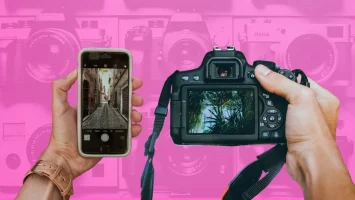
Digital photography also emerged during this period. Early digital cameras were expensive and low-resolution. However, they offered instant feedback and eliminated film costs. This convenience quickly appealed to consumers.
Video compression technologies have improved significantly. Formats like MPEG made digital video more accessible. This paved the way for streaming media. The internet was slowly transforming into a visual medium.
The Mobile Revolution: Digital Media in Your Pocket
The early 2000s ushered in the mobile revolution. Feature phones could access basic internet services. However, it was the advent of smartphones that truly changed the game. The iPhone, launched in 2007, was a catalyst.
Smartphones brought powerful computing to our pockets. High-resolution screens and fast processors became standard. This enabled a rich multimedia experience on the go. Apps revolutionised how we consumed content.
Mobile internet speeds increased dramatically with 3G and 4G. This made streaming video and large file downloads practical. Digital media was no longer confined to desktop computers. It became truly ubiquitous.
The camera became a central feature of smartphones. Everyone could now capture high-quality photos and videos. This led to an explosion of user-generated content. Social media platforms capitalised on this trend.
Social Media and User-Generated Content
Social media platforms became dominant forces in the late 2000s. MySpace and Facebook led the charge. They provided platforms for users to connect and share. This fundamentally altered digital media consumption.
Users moved from passive consumption to active creation. Sharing photos, videos, and status updates became commonplace. This democratised content creation. Anyone could be a publisher.
Platforms like YouTube, launched in 2005, became central to video sharing. It allowed anyone to upload and view videos. This created a new generation of content creators. Viral videos became a cultural phenomenon.
Twitter introduced microblogging, fostering real-time information sharing. Instagram focused on visual storytelling through images. These platforms blurred the lines between personal and public content. They redefined social interaction.
Streaming and Interactive Media: The Present Landscape
The 2010s saw the rise of streaming services. Netflix, originally a DVD rental service, transitioned to online streaming. Its success paved the way for countless others. Disney+, Amazon Prime Video, and others followed suit.
Music streaming services like Spotify and Apple Music also gained immense popularity. They offered vast libraries of music on demand. This shifted the music industry’s business model. Ownership gave way to access.
Interactive media became increasingly sophisticated. Video games evolved into highly immersive experiences. Virtual reality (VR) and augmented reality (AR) began to emerge. These technologies promise new forms of digital interaction.
Podcasts experienced a resurgence, offering on-demand audio content. E-books and digital magazines transformed reading habits. Digital media now encompasses a vast array of formats. It continues to diversify at a rapid pace.
The Future of Digital Media: AI and Immersive Experiences
The future of digital media promises even more profound changes. Artificial Intelligence (AI) is already playing a significant role. AI algorithms personalise content recommendations. They also power advanced editing tools.
AI is transforming content creation itself. Generative AI can produce text, images, and even video. This could revolutionise industries like advertising and filmmaking. The ethical implications are actively being debated.
Immersive experiences are set to become more mainstream. Advanced VR and AR technologies are making strides. The metaverse concept, though still nascent, envisions persistent virtual worlds. These could redefine social interaction.
Holographic displays and haptic feedback systems are also in development. They aim to bridge the gap between the digital and physical. The boundaries of what constitutes “digital media” will continue to expand.
The journey of digital media is one of continuous innovation. From early computing to today’s AI-driven experiences, each decade has brought transformative changes. It has reshaped communication, entertainment, and education.
The rapid pace of technological advancement ensures this evolution will continue. We are likely to see even more immersive and personalised digital experiences. The future of digital media is undoubtedly exciting. It will continue to redefine our lives.