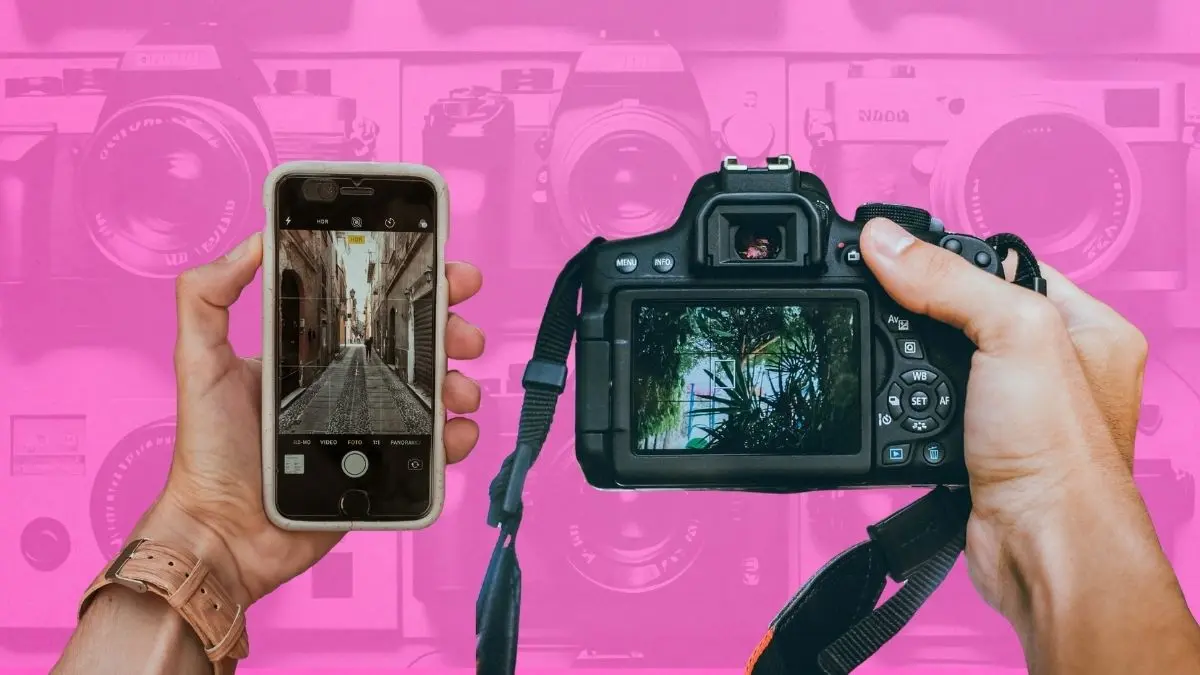
Capturing moments and reliving them is a fundamental human desire. Digital photography has revolutionised this ability, making it accessible to virtually everyone.
Whether through a mobile phone, a tablet, an affordable digital compact, or a sophisticated professional DSLR, almost everyone has taken a photograph. This article delves into the transformative journey of digital photography.
We will explore its surprising history, unravel the mechanics of how digital cameras work, and debunk common myths.
Crucially, we will examine its profound impact on various photographic genres.
Finally, we will look to the future, specifically addressing the burgeoning role of Artificial Intelligence in shaping the art and science of image-making.
Introduction to Digital Photography: A New Era of Image Capture
The allure of photography lies in its power to freeze time. Digital photography has democratised this power, putting advanced capabilities into the hands of millions. Unlike traditional film cameras, digital devices offer instant gratification. There is no waiting for film development.
This immediate feedback loop has fundamentally changed how we interact with images. It fosters experimentation and encourages creativity. The digital format also allows for endless duplication without quality loss. This is a significant advantage over analogue methods.
One of the most appealing aspects for many is the perceived simplicity. You do not necessarily need to understand shutter speed, aperture, or ISO settings. Modern cameras, especially smartphones, handle these complexities automatically. Users can simply frame their shot and click.
This ease of use has led to an explosion of image creation. From casual snapshots to professional masterpieces, digital photography underpins our visual communication. It has become an integral part of daily life.
A Surprising History: The Dawn of Digital Imaging
The concept of digital photography predates the widespread availability of digital cameras by many decades. Its roots stretch back to the mid-20th century, long before personal computers were common. Early innovations laid the groundwork for this technological revolution.
A significant early step was the development of digital scanning. In 1957, Russell Kirsch created the first digital image of a photograph using a drum scanner. This device did not take photographs but converted existing images into digital data. It recognised varying intensities of light and shade.
Once processed, the scanner saved these intensities as binary signals. This process, converting analogue light information into digital bits, was foundational. It demonstrated the feasibility of representing visual data electronically. This was a crucial conceptual leap.
The Cold War era provided a powerful impetus for digital imaging. In the early 1970s, intelligence agencies sought ways to capture images remotely. Sending film cameras into space posed a significant problem. Retrieving the exposed film was extremely difficult.
Digital cameras offered a revolutionary solution. Images could be captured electronically and transmitted back to Earth. This eliminated the need for physical film retrieval. It was a game-changer for reconnaissance missions.
Building on this need, in 1975, Steven Sasson, an engineer at Eastman Kodak, developed the first self-contained digital camera. This pioneering device weighed approximately 3.6 kilograms (8 pounds). It recorded black and white images onto a cassette tape.
The resolution was a mere 0.01 megapixels. It took 23 seconds to capture an image. Despite its rudimentary nature, it was a true digital camera. It proved the concept of electronic image capture. This invention marked a pivotal moment in photographic history.
How Digital Cameras Work: Capturing Light Electronically
At its core, a digital camera functions similarly to the human eye. It captures light reflected off an object. This light then passes through a series of lenses. These lenses focus the light to form an image.
However, instead of focusing light onto a piece of chemically treated film, a digital camera directs it onto an image sensor. This sensor is typically a Charge-Coupled Device (CCD) or a Complementary Metal-Oxide-Semiconductor (CMOS) sensor. These semiconductors are arrays of tiny light-sensitive elements called photosites or pixels.
Each photosite converts the incoming light into an electrical charge. The amount of charge generated is proportional to the intensity of the light. More light produces a stronger charge. This analogue electrical signal is then converted into digital data.
An analogue-to-digital converter (ADC) performs this crucial step. It translates the varying electrical charges into discrete numerical values. These values represent the brightness and colour information for each pixel. This digital data is then processed by the camera’s internal computer.
Once the image is captured and digitised, it is stored on a memory card. This eliminates the need for chemical development. Digital photographs can be instantly reviewed on the camera’s screen. They can then be transferred to a computer.
From a computer, images can be shared instantly with family and friends. They can be published online for a global audience. Furthermore, digital images offer immense flexibility for post-processing. Users can adjust brightness, contrast, colour balance, and much more.
The Megapixel Myth: Quality Beyond Quantity
For many years, a pervasive myth dominated camera marketing: “the more megapixels, the better the photo quality.” This notion led consumers to believe that higher megapixel counts automatically equated to sharper, more detailed images. However, this is a significant oversimplification.
A megapixel represents one million pixels. While more pixels mean a larger image file and potentially more detail for very large prints or significant cropping, it does not inherently guarantee better image quality. The size of the individual pixels on the sensor is equally, if not more, important.
Cramming more megapixels onto a small sensor means each pixel must be smaller. Smaller pixels gather less light. This makes them more susceptible to noise, especially in low-light conditions or at higher ISO settings. The image can appear grainy or muddy.
Conversely, a camera with fewer megapixels but a larger sensor often has larger individual pixels. These larger pixels can collect more light. This results in cleaner images with better dynamic range, particularly in challenging lighting. This is why professional cameras often prioritise sensor size over raw megapixel count.
Camera manufacturers often push higher megapixel counts as a marketing strategy. They know that consumers associate “more” with “better.” While advancements in sensor technology and image processing engines have mitigated some of these issues, the fundamental principle remains. Quality is a complex interplay of sensor size, pixel size, lens quality, and internal processing.
The Evolution of Digital Camera Types
The digital camera landscape has diversified dramatically since its inception. Each type serves different needs and user preferences. This evolution has made photography accessible to a broader audience.
Compact Digital Cameras: These were among the first widely adopted digital cameras. They offered simplicity and portability. Their “point-and-shoot” nature made them popular for casual photographers. While largely superseded by smartphones, they paved the way.
Digital Single-Lens Reflex (DSLR) Cameras: DSLRs brought professional-grade image quality and versatility to the digital realm. They feature interchangeable lenses and optical viewfinders. Their larger sensors and robust controls appealed to enthusiasts and professionals.
Mirrorless Cameras: These represent a significant technological leap from DSLRs. They omit the mirror box and optical viewfinder, making them smaller and lighter. Mirrorless cameras offer comparable image quality and often superior video capabilities. They are rapidly becoming the industry standard.
Smartphone Cameras: The most ubiquitous form of digital camera. Smartphones have revolutionised everyday photography. Their computational photography capabilities, driven by powerful processors and AI, allow them to produce surprisingly high-quality images despite tiny sensors. Their constant connectivity makes sharing instant.
This diverse range ensures that there is a digital camera suitable for every purpose. From professional assignments to daily snapshots, digital technology provides the tools.
Impact on Photography Genres and Workflows
Digital photography has profoundly impacted nearly every genre of photography. It has transformed workflows, opened new creative avenues, and challenged traditional practices. The shift has been seismic.
Photojournalism: The immediacy of digital capture and transmission revolutionised news reporting. Photographers can send images from remote locations almost instantly. This has accelerated the news cycle dramatically.
Portrait and Fashion Photography: Digital allows for instant review of poses and lighting. This streamlines shoots and enables immediate adjustments. Post-processing tools offer unprecedented control over final aesthetics.
Landscape Photography: Digital sensors provide greater dynamic range, capturing detail in both highlights and shadows. Advanced techniques like HDR (High Dynamic Range) are easily achievable. The ability to review images on location ensures optimal composition.
Wedding Photography: Digital cameras offer reliability and high frame rates, ensuring no crucial moment is missed. The vast storage capacity allows for extensive coverage. Post-production efficiency is greatly enhanced.
Post-Processing and Workflow: The advent of powerful software like Adobe Photoshop and Lightroom has been transformative. Photographers can now refine, enhance, and manipulate images with precision. This has become an integral part of the photographic process.
Digital workflows are highly efficient. Images can be imported, organised, edited, and exported rapidly. This has increased productivity for professionals. It has also empowered amateurs to achieve professional-looking results.
The Future: Artificial Intelligence in Photography
Artificial Intelligence (AI) is already deeply embedded in modern photography. Its influence is set to grow exponentially, fundamentally changing how images are captured, processed, and even created. AI is becoming the invisible hand behind many photographic advancements.
Computational Photography: Smartphones are leading the charge here. AI algorithms combine multiple exposures to create stunning HDR images. They simulate shallow depth of field for “Portrait Mode” effects. Night Mode uses AI to gather light and reduce noise in challenging conditions.
Image Enhancement and Correction: AI-powered software can automatically reduce noise, sharpen details, and correct lens distortions. It can intelligently upscale images, increasing resolution without significant loss of quality. AI can even automatically colourise old black and white photos.
Object Recognition and Tagging: AI helps cameras and software identify subjects within an image. This enables smart autofocus systems to track faces and eyes. It also facilitates automated tagging and organisation of vast photo libraries.
Automated Editing: AI tools can perform complex editing tasks with minimal user input. This includes automatic sky replacement, intelligent subject selection, and one-click colour grading. These features democratise advanced editing techniques.
Generative AI: This is perhaps the most revolutionary aspect. Text-to-image models can create entirely new photographs from simple text prompts. Users can describe a scene, and the AI generates it. This blurs the line between photography and digital art.
AI can also perform style transfer, applying the artistic style of one image to another. It can remove unwanted objects seamlessly from photographs. The creative possibilities are immense and constantly expanding.
How AI Will Change Photography
The integration of AI will bring profound shifts to the photographic landscape.
Democratisation of Advanced Techniques: Complex photographic techniques that once required significant skill and expensive equipment will become accessible to everyone. AI will handle the technical heavy lifting.
Blurring of Reality and Artifice: As AI becomes more adept at generating and manipulating images, the distinction between a “captured” photograph and a “created” image will become increasingly blurred. This raises significant questions about authenticity and trust.
New Creative Possibilities: AI will unlock entirely new forms of artistic expression. Photographers will move beyond merely capturing reality to actively co-creating with intelligent systems. The camera may become less about recording and more about interpreting and generating.
Ethical Considerations: The rise of AI in photography brings ethical challenges. Issues like deepfakes, consent, copyright for AI-generated images, and the potential for misuse will require careful consideration and regulation.
Workflow Transformation: AI will automate many tedious aspects of post-production, freeing photographers to focus on creative vision. Image culling, basic corrections, and even complex retouching could become largely automated.
The future of photography is inextricably linked with AI. It promises a world where image creation is more intuitive, powerful, and creatively expansive than ever before.
A Constantly Evolving Art Form
Digital photography has undeniably had a colossal impact on contemporary society. It has not only transformed how we document our lives but has also opened up countless new job opportunities and career paths. From professional fashion photographers to wedding specialists and sports photographers, the digital era has made these professions more accessible and dynamic.
The continuous innovation in digital camera technology, coupled with the burgeoning power of Artificial Intelligence, ensures that photography will remain a vibrant and evolving art form. As AI continues to integrate, it will redefine the very essence of image-making, offering unprecedented creative control and challenging our perceptions of reality. The journey of photography is far from over; it is merely entering its most exciting chapter yet.