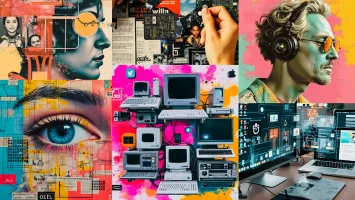
Video has undergone an extraordinary transformation. Once a niche format, it now profoundly shapes our digital interactions.
Its journey from grainy, slow-loading clips to high-definition, ubiquitous content is remarkable.
We explore the key factors behind video’s meteoric rise. Examining the technological breakthroughs and cultural shifts that propelled video to prominence.
Understanding this dominance is crucial for anyone engaging with modern digital platforms.
Prepare to discover how video conquered the digital realm.
The Early Days: Challenges and First Steps
Digital video was initially a challenging proposition. Early internet speeds were incredibly slow. This made streaming or even downloading video files a frustrating experience. Compression technologies were still in their infancy.
Dial-up modems simply could not handle large video data. Buffering was a constant issue for users. This limited video to short, low-quality clips. It was far from the seamless experience we know today.
Despite these hurdles, the potential of digital video was clear. Early adopters experimented with basic video sharing. Researchers and enthusiasts saw its promise. They continued to push technological boundaries.
The development of better codecs, like MPEG, was crucial. These allowed for more efficient compression of video data. This made files smaller and more manageable. It was a vital step towards wider adoption.
The YouTube Revolution: Democratising Video
The launch of YouTube in 2005 marked a turning point. It provided an accessible platform for anyone to upload and share videos. This democratised video creation and distribution. Suddenly, everyone could be a broadcaster.
YouTube addressed many of the earlier technical barriers. It simplified the uploading process for users. Its infrastructure was designed to handle vast amounts of video content. This ease of use was revolutionary.
The platform quickly gained immense popularity. Viral videos became a new cultural phenomenon. Content creators, from amateurs to professionals, found an audience. This fostered a vibrant new ecosystem.
YouTube’s success demonstrated the public’s appetite for video content. It proved that people wanted to watch and share videos online. This laid the groundwork for video’s future dominance. It truly changed everything.
Mobile Video and Social Media Integration
The advent of smartphones profoundly accelerated video’s growth. High-resolution screens and powerful cameras became standard. This allowed users to capture and consume video on the go. Mobile video became ubiquitous.
Social media platforms quickly integrated video capabilities. Facebook, Instagram, and later TikTok prioritised video content. They recognised its engaging nature. This led to an explosion of user-generated video.
Short-form video formats gained immense popularity. Platforms like Vine, and then TikTok, thrived on brief, engaging clips. These were perfectly suited for mobile consumption. They captured attention quickly.
The ease of sharing videos across social networks amplified their reach. A single video could go viral globally in hours. This made video an incredibly powerful tool for communication and entertainment. It was a game-changer.
The Streaming Wars: Content Explosion and Competition
The 2010s ushered in the era of streaming wars. Netflix, a pioneer in online streaming, invested heavily in original content. Its success inspired a multitude of competitors. Disney+, Amazon Prime Video, and others entered the fray.
This intense competition led to an unprecedented explosion of video content. Production budgets soared as companies vied for subscribers. High-quality, cinematic experiences became available on demand. The consumer benefited greatly.
Live streaming also gained significant traction. Platforms like Twitch became central for gaming and entertainment. Businesses and individuals used live video for events and interactions. It added an immediate, authentic dimension.
The shift from linear television to on-demand streaming was profound. Consumers gained control over what and when they watched. This fundamentally reshaped media consumption habits. Video became the preferred format.
Video’s Impact on Marketing and Business
Businesses quickly recognised video’s immense potential. Video marketing became an essential strategy. Explainer videos, product demonstrations, and brand stories engaged audiences more effectively. They built stronger connections.
Social media advertising heavily leveraged video. Short, impactful video ads captured attention in crowded feeds. They delivered complex messages efficiently. This led to higher engagement rates for brands.
E-commerce platforms integrated video to showcase products. Customers could see items in use or from multiple angles. This enhanced the online shopping experience. It reduced uncertainty for buyers.
Corporate communication also embraced video. Training videos, internal announcements, and virtual meetings became common. Video facilitated remote work and global collaboration. Its versatility was unmatched.
Live Video and Interactivity: Real-Time Engagement
Live video emerged as a powerful tool for real-time engagement. News organisations used it for breaking stories. Musicians performed live concerts for global audiences. It offered an immediate, unedited experience.
Interactive elements were increasingly integrated into video. Polls, Q&A sessions, and clickable overlays enhanced viewer participation. This transformed passive viewing into an active experience. It fostered deeper connections.
Gaming platforms like Twitch pioneered interactive live streams. Viewers could chat with streamers and influence gameplay. This created a strong sense of community. It blurred the lines between content creator and audience.
During global events, live video became crucial for information dissemination. It provided immediate updates and a sense of shared experience. Its authenticity resonated with audiences worldwide. It continues to grow in importance.
Video in Education and Communication
Video’s role extends far beyond entertainment and marketing. It has become an indispensable tool in education. Online courses and tutorials heavily rely on video content. Visual explanations enhance learning.
Complex concepts can be simplified through animation and demonstrations. Students can learn at their own pace. This flexibility has revolutionised access to education. It has opened up new learning opportunities.
In communication, video conferencing became standard practice. Tools like Zoom and Microsoft Teams facilitated remote meetings. This was particularly vital during global lockdowns. It maintained connectivity for millions.
Video calls connect families and friends across distances. It provides a richer, more personal interaction than text or audio. Video has truly become integral to how we communicate in the modern age.
AI, VR, and Immersive Video
The future of video promises even more innovation. Artificial intelligence (AI) is set to transform video creation and consumption. AI can automate video editing, generate captions, and personalise content.
Generative AI can even create realistic video footage from text prompts. This could revolutionise filmmaking and advertising. The potential for creative expression is immense. Ethical considerations are being debated.
Virtual reality (VR) and augmented reality (AR) are pushing the boundaries of immersive video. VR experiences transport viewers into new environments. AR overlays digital information onto the real world.
These technologies promise more interactive and engaging video experiences. The lines between passive viewing and active participation will continue to blur. Video’s dominance is set to evolve further.
Video’s journey from a technical challenge to a dominant digital force is remarkable. Its accessibility, versatility, and engaging nature have driven its widespread adoption. It continues to reshape how we learn, work, and connect.
From YouTube’s democratisation to the streaming wars and beyond, video’s evolution is ongoing. As new technologies like AI and immersive realities emerge, video will undoubtedly remain at the forefront of digital media. Its influence is only set to grow.
Video of The Future
AI’s impact on filmmaking will be transformative. Pre-production could see AI assisting with script analysis. It will help with character design. AI might even generate storyboards or animatics from text.
During production, AI-powered cameras could autonomously track subjects. They might optimise lighting. AI could even generate virtual sets in real-time. Post-production will be revolutionised by AI.
AI will automate tedious tasks like rotoscoping. It will handle colour grading and sound mixing. This frees human artists to focus on creative direction. It allows them to push artistic boundaries further.
Animation is another field poised for radical change. AI can already generate realistic character movements. It creates facial expressions. AI can even produce entire animated sequences from simple prompts.
This could drastically reduce animation production time and cost. Artists might provide initial concepts or keyframes. AI would then fill in intricate details and smooth transitions. This democratises animation.
It allows smaller studios and independent creators to produce high-quality content. This was previously only achievable with large budgets. AI is levelling the playing field for animators.
Beyond traditional film and animation, AI will enable new video content forms. Imagine interactive narratives where AI adapts storylines. Choices made by viewers would create personalised cinematic experiences.
AI could generate dynamic backgrounds for live streams. It might create hyper-realistic virtual influencers. Digital doubles for advertising and entertainment will also emerge.
The ability to generate video from text or simple sketches will unlock unprecedented creative freedom. This applies to content creators across all industries. It is a new era of visual storytelling.
The implications for advertising and marketing are equally profound. AI can generate multiple versions of video ads. These can be tailored to specific audience segments. AI optimises for engagement and conversion.
Personalised video content will become commonplace. Elements like names or product features will be dynamically inserted. This level of customisation will make marketing messages more impactful. It ensures relevance for consumers.
Ultimately, AI will serve as a powerful co-creator and assistant. This applies throughout the video production pipeline. Human creativity, vision, and storytelling will remain central. AI will augment these capabilities.
It will make complex tasks simpler. It will open doors to previously unimaginable visual experiences. The future of video is not just about watching. It is about interacting with and generating dynamic, intelligent visual narratives. These will be deeply integrated with our digital lives.