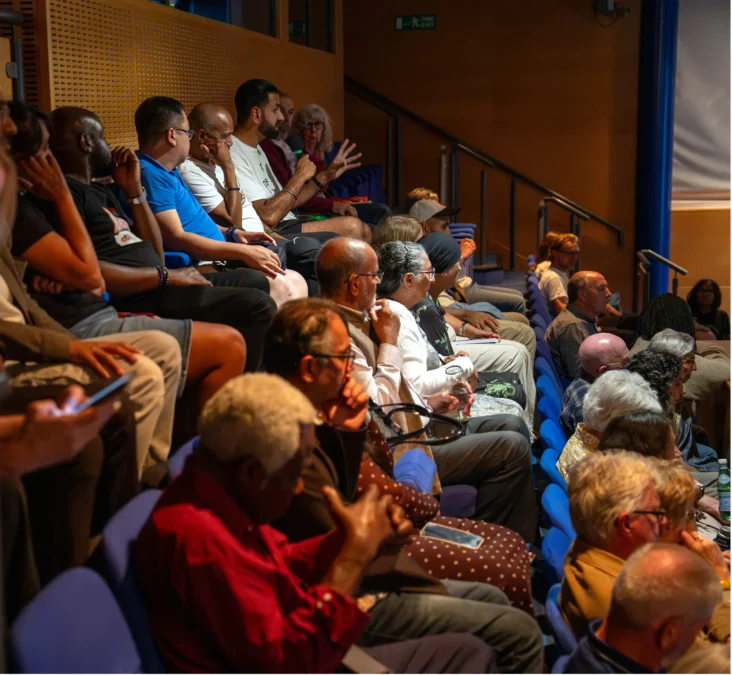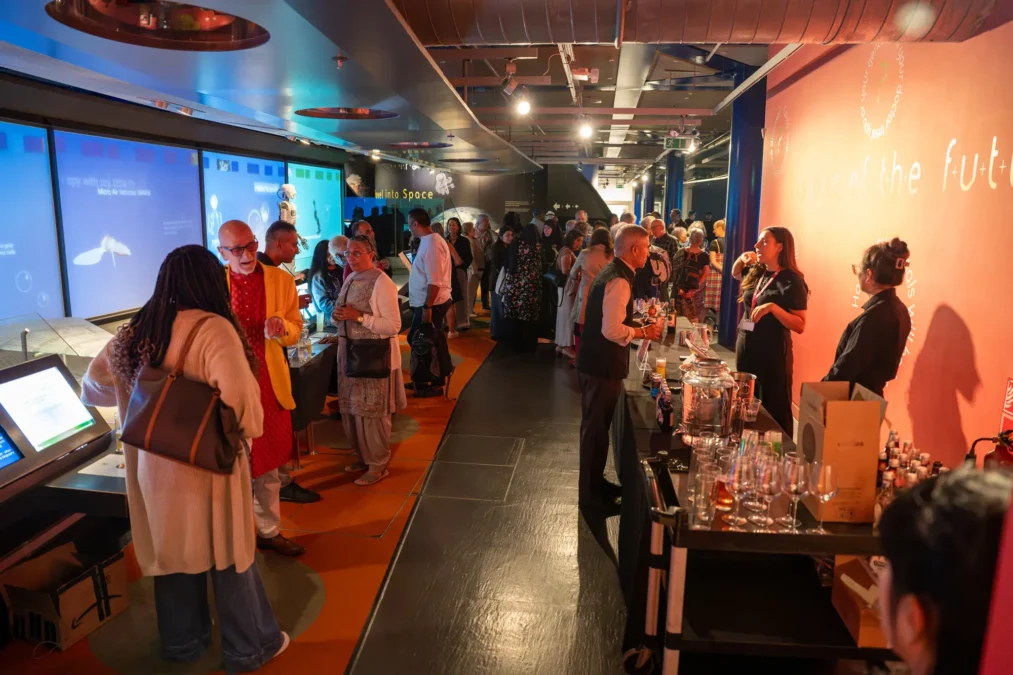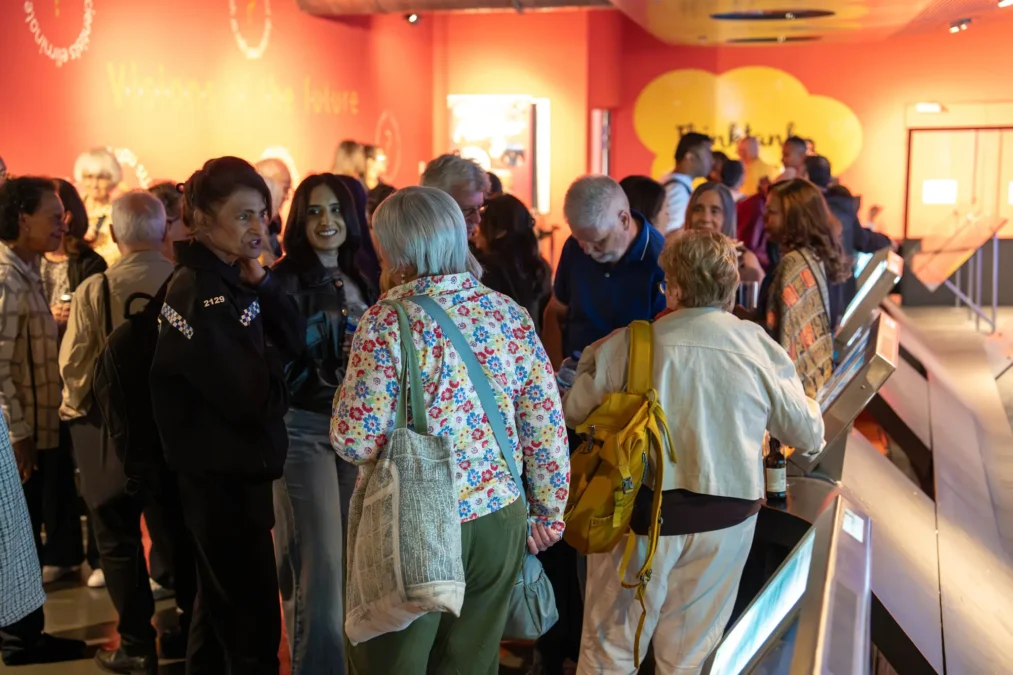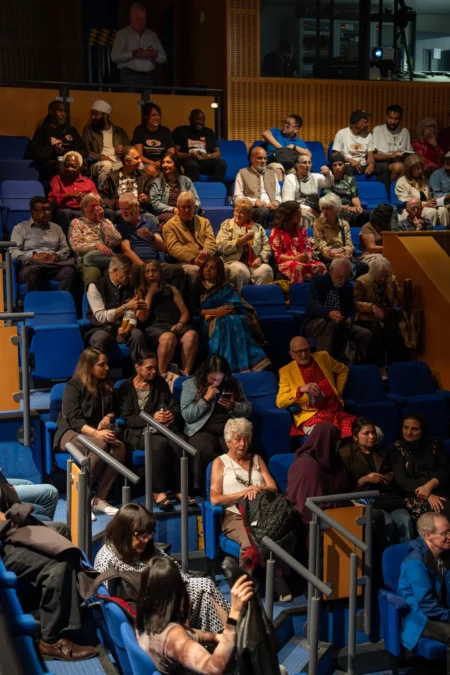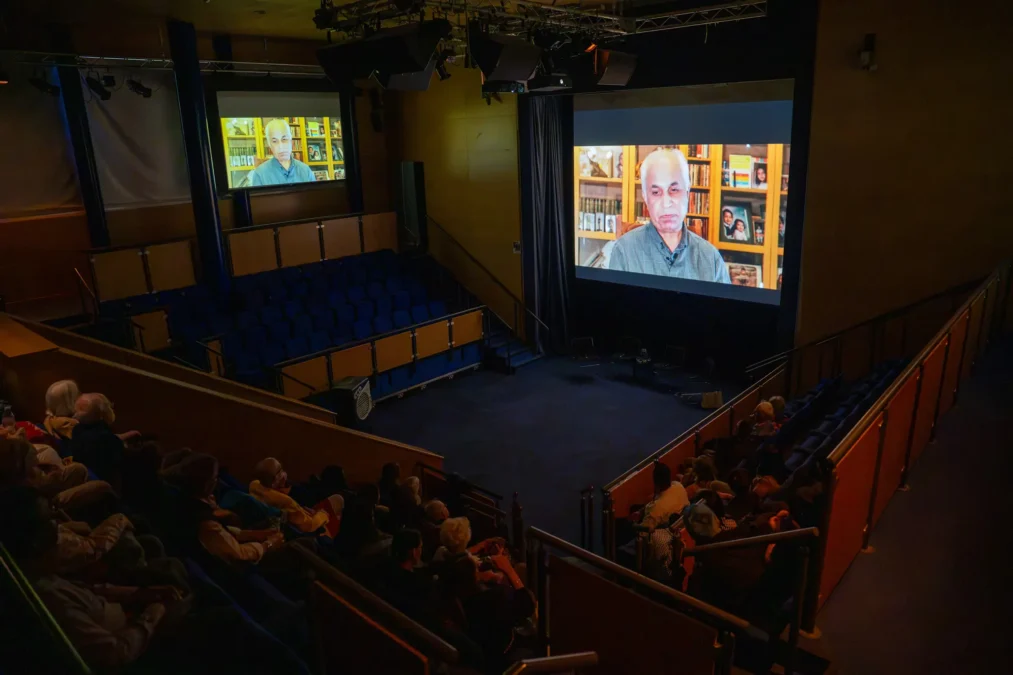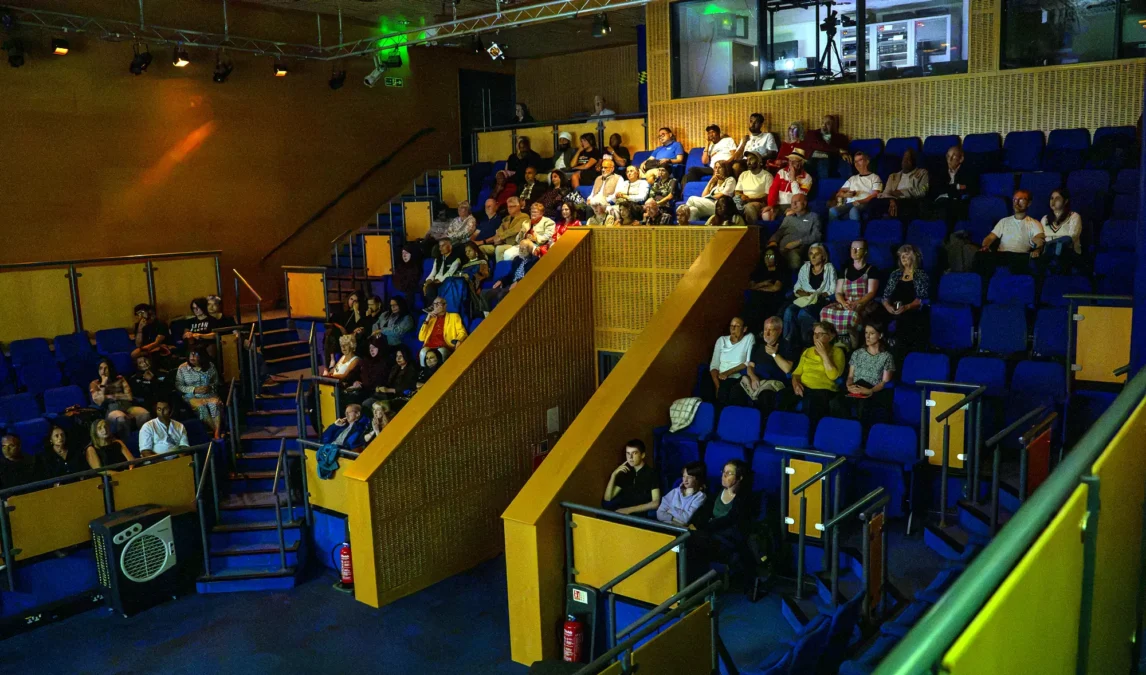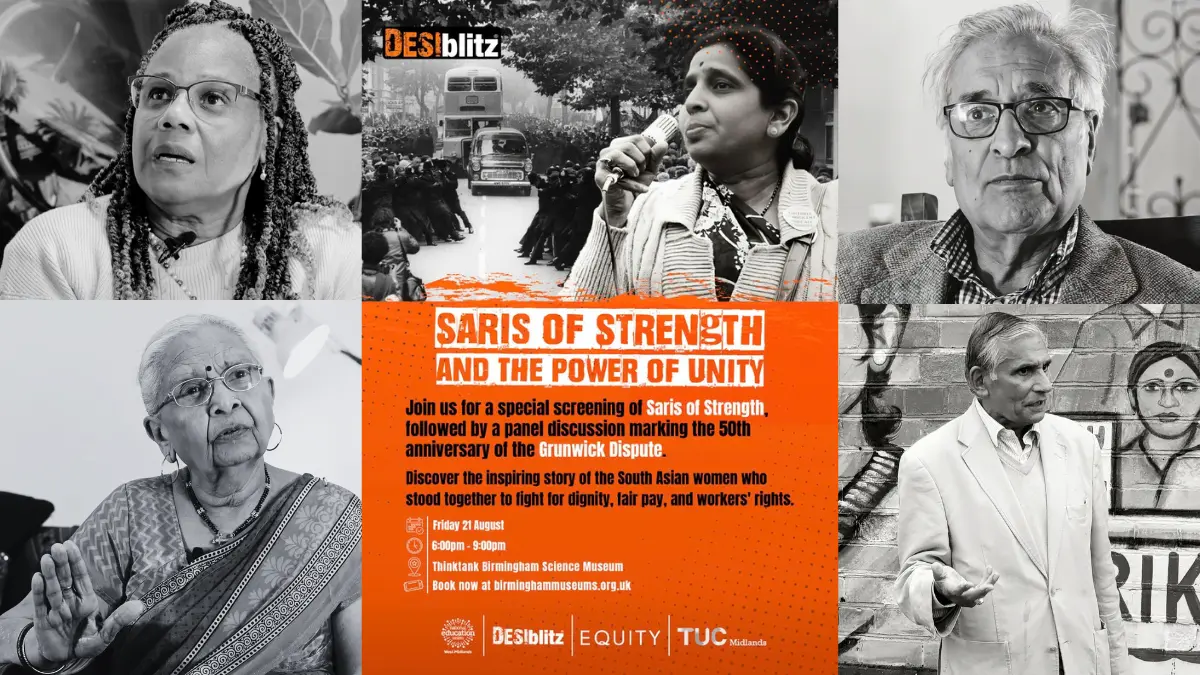
A special Birmingham screening of Saris of Strength: The Power of Unity brought together community, trade union, academic and cultural voices to reflect on the legacy of the Grunwick dispute and the South Asian women at the heart of one of Britain’s most significant industrial struggles.
Hosted by Aidem Digital and DESIblitz, the screening provided an opportunity to revisit the events of the 1970s and consider what the experiences of the Grunwick women can tell us about workers’ rights, equality, solidarity and social change today.
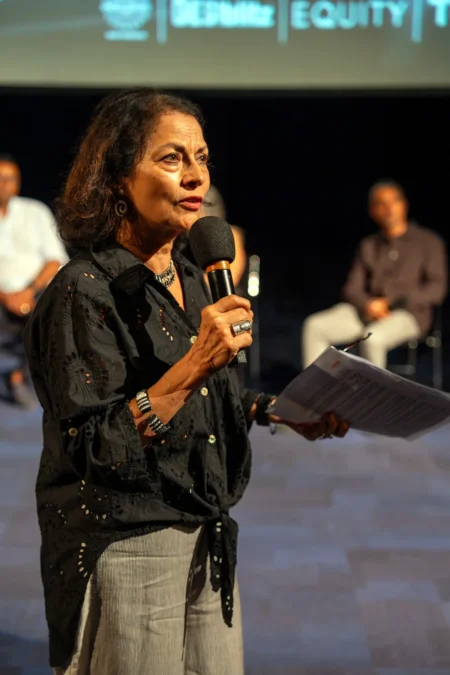
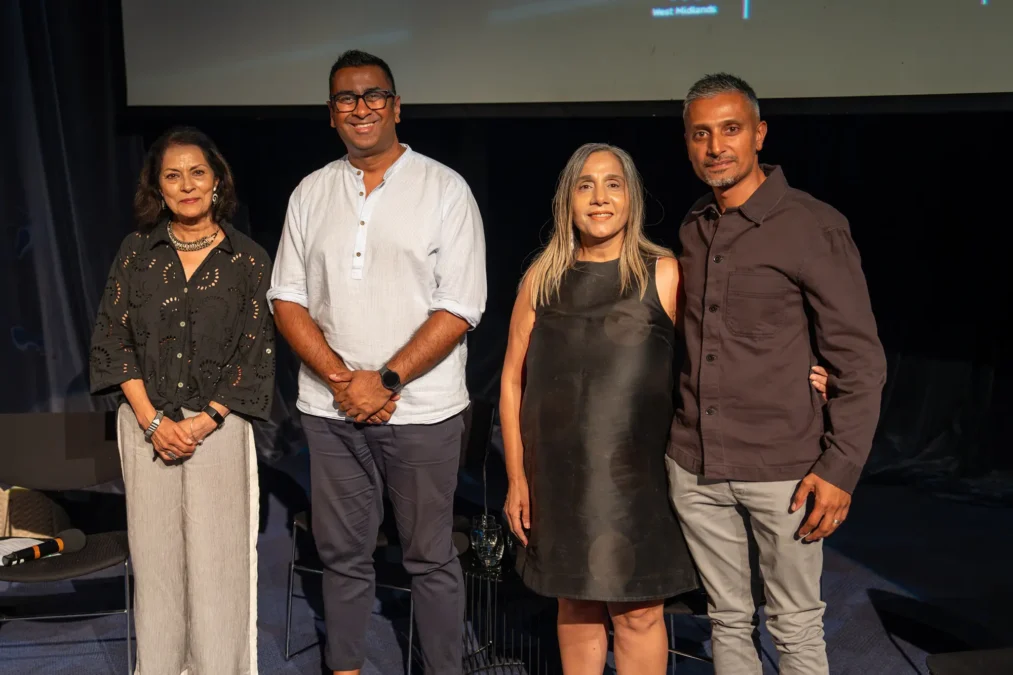
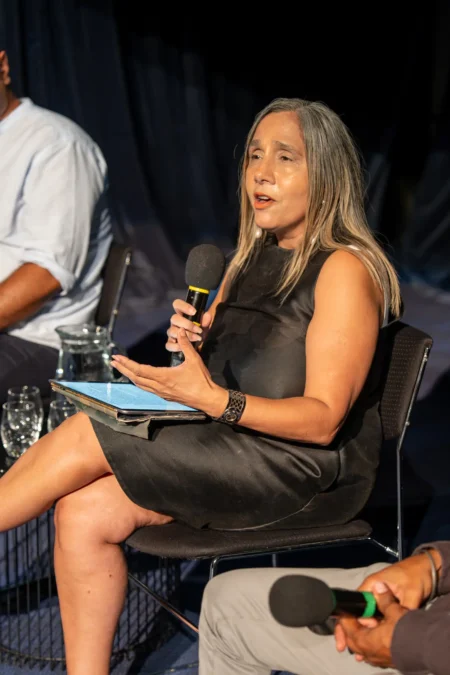
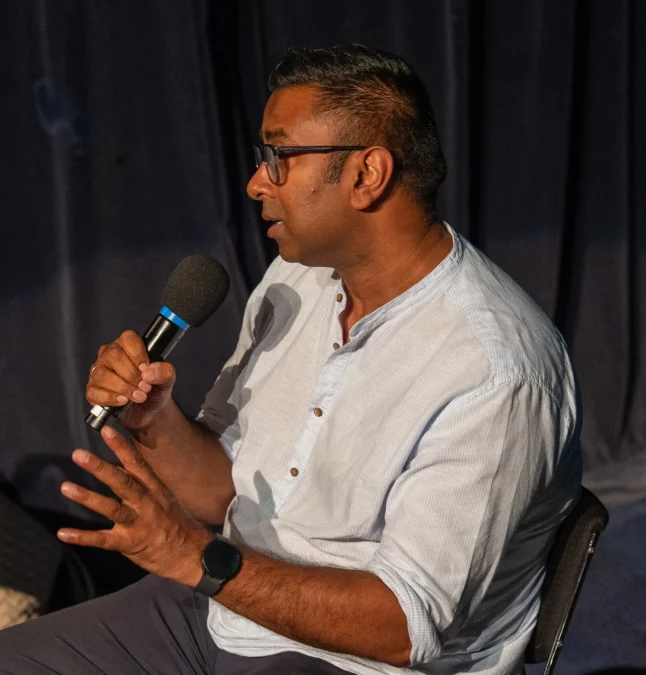
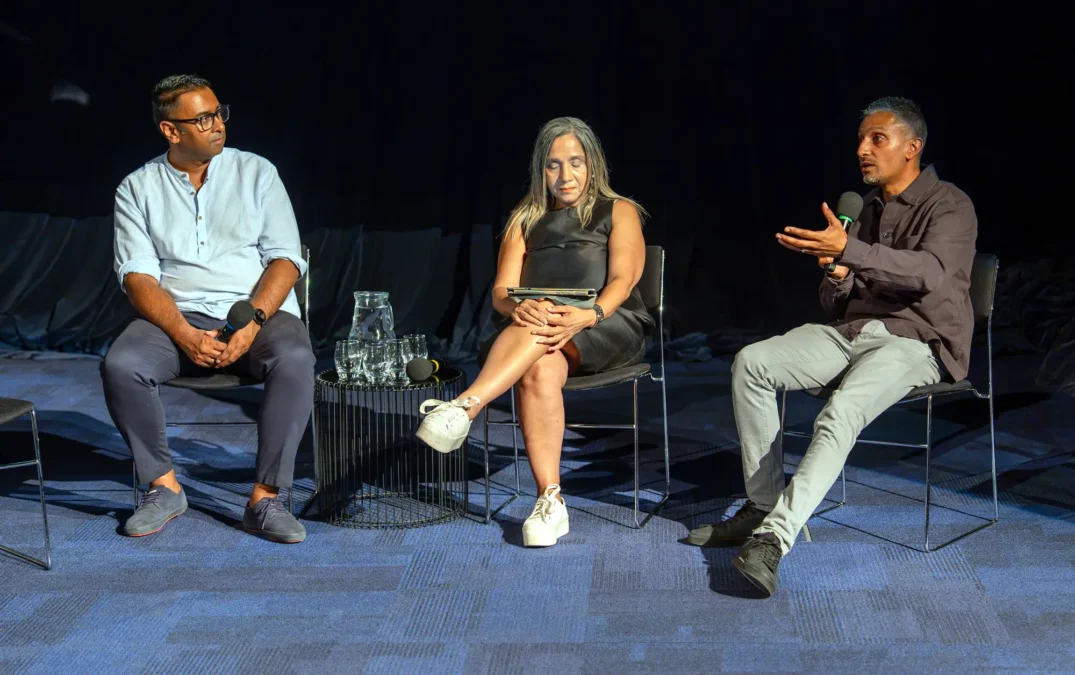
The film was followed by a panel discussion featuring eyewitness and broadcaster Anita Bhalla OBE, Unite the Union representative Paresh Patel, University of York academic and senior leader Kiran Trehan, and DESIblitz Director Indi Deol.
An Eyewitness to Grunwick
For Anita Bhalla OBE, the story of Grunwick is not simply a piece of British history.
Bhalla joined the Grunwick picket line as a young activist and witnessed the dispute first-hand. Her personal connection to the events has continued to inform her work and understanding of race, identity, social justice and community activism.
She has recently published her memoir, which reflects on her experiences growing up as the daughter of immigrants, navigating different cultures and beginning her working life, as well as the experiences that helped shape her subsequent career and commitment to social justice.
Her personal connection to Grunwick provided a powerful perspective for the discussion, connecting the events portrayed in Saris of Strength with the experiences of someone who was there.
Bhalla also helped lead the conversation following the screening, bringing together the different perspectives represented on the panel.
The Grunwick Dispute
The Grunwick dispute began in 1976 when workers at a film-processing laboratory in Willesden, north-west London, walked out over working conditions and union recognition.
Many of the workers were South Asian women, and the dispute quickly developed into a much wider national campaign.
The figure of Jayaben Desai became particularly associated with the dispute. Her leadership and determination helped bring national attention to the experiences of migrant women workers and the wider issues of race, gender and workers’ rights.
The dispute attracted widespread support, including from trade unionists and members of the wider community, and became one of the most prominent industrial disputes of the 1970s.
While the workers ultimately did not achieve their demands, the dispute left a significant legacy in discussions around race, gender, migration, trade unionism and workplace equality.
Commenting on organising the event, Indi Deol said:
“Stories like the Grunwick dispute are an important part of Britain’s history, but they are still not known widely enough, particularly among younger generations.”
The women at the centre of Grunwick were not just workers; they were women who challenged inequality, stood up for their rights and became part of a much bigger conversation about race, gender, migration and solidarity.”
Different Perspectives on a Shared History
The panel brought together perspectives from those with very different relationships to the Grunwick story.
- Anita Bhalla OBE – an eyewitness to the dispute, provided a personal perspective on the events and the wider social context in which they took place.
- Paresh Patel – representing Unite the Union, brought extensive experience of trade unionism, workers’ rights and collective action. His contribution examined the significance of Grunwick for the labour movement and considered its continuing relevance to workplace equality and workers’ rights today.
- Kiran Trehan – an academic and senior leader at the University of York, brought an academic perspective informed by her expertise in leadership, equality, inclusion and organisational change. She explored the wider social and cultural significance of the Grunwick women and the legacy they left.
- Indi Deol – Director of DESIblitz, contributed a perspective rooted in South Asian media, storytelling and community engagement, considering the importance of ensuring that histories such as Grunwick continue to reach new and younger audiences.
Together, the panel considered how a dispute that took place 50 years ago continues to raise questions that remain relevant today.
Why the Story Still Matters
One of the important themes emerging from the discussion was the importance of remembering the contribution of South Asian women to Britain’s social and economic history.
The Grunwick women were migrant workers whose experiences reflected wider questions around race, employment, identity and belonging in Britain during the 1970s.
Their story also demonstrates how individual action can develop into a much wider movement, attracting support from people and organisations beyond the original workplace.
For audiences who may have grown up knowing little about Grunwick, the screening offered an opportunity to discover a significant part of Britain’s multicultural and working-class history.
For those familiar with the story, it provided an opportunity to reconsider it through contemporary perspectives on equality, inclusion, workers’ rights and social change.
Connecting Britain’s History with its Future
The Birmingham event also highlighted the importance of preserving and sharing stories of communities whose contributions have not always received the same attention in mainstream accounts of British history.
For Aidem Digital and DESIblitz, using media and storytelling to connect audiences with underrepresented histories forms part of a wider commitment to creating digital media with social impact.
Indi Deol said:
“Bringing Saris of Strength and The Power of Unity to Birmingham gave us an opportunity to revisit that history and, importantly, to have a conversation about what it means today.”
“At DESIblitz, we believe storytelling can create connections between generations and ensure that important voices and experiences are not forgotten.
“The panel brought together personal experience, trade unionism, academia and media, and showed just how relevant the legacy of Grunwick remains 50 years on.”
Bringing Saris of Strength: The Power of Unity to Birmingham created a space not only to remember the women of Grunwick, but also to encourage conversations about the issues their experiences continue to raise.
Fifty years after the dispute began, the story of Grunwick remains a powerful reminder of the role that workers, communities and individuals can play in challenging inequality and creating social change.
The screening and panel discussion offered audiences the chance to look back at that history while also considering what its legacy means for Britain today.