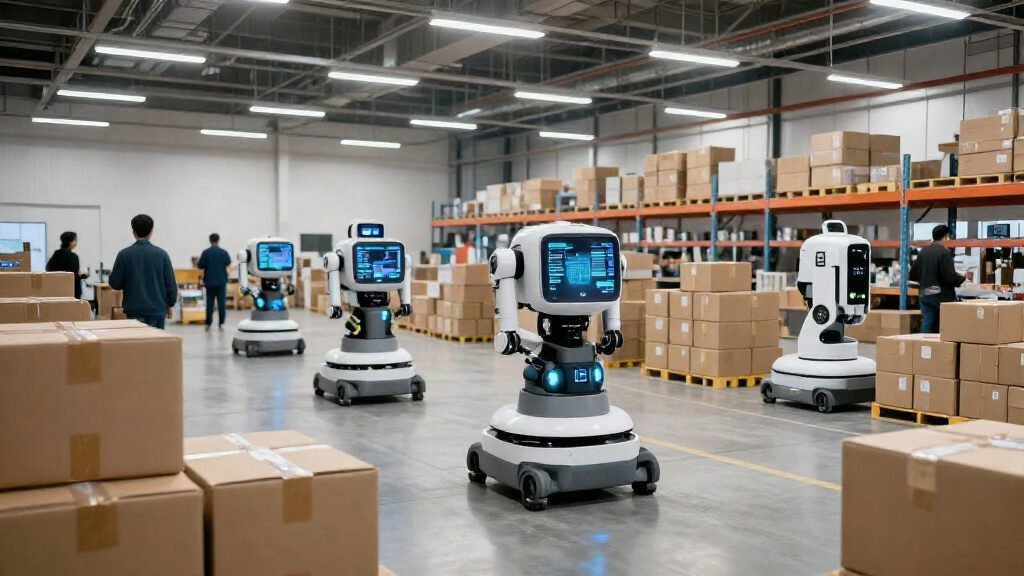
Chinese manufacturers are rapidly deploying advanced automated systems across major UK retail chains, fundamentally reshaping the landscape of robotics UK. This expansion transforms warehouse logistics and store operations, prompting policymakers to address workforce displacement while retailers pursue operational efficiency and supply chain resilience.
Chinese automation manufacturers are accelerating hardware deployments across British high streets and national distribution centres this quarter, responding to persistent rising operational costs and chronic staffing shortages across the wider sector.
According to BBC, the development adds fresh context for organisations tracking robotics UK and the pace of technology adoption.
Major supermarket chains and department stores are integrating these advanced robotic units to streamline inventory management and reduce manual handling tasks within busy retail spaces, directly tackling ongoing chronic staffing shortages across the commercial sector.
According to the BBC, warehouse operators in Manchester and Birmingham are piloting autonomous mobile robots to handle heavy pallets and optimise loading bay workflows without requiring extensive facility renovations.
Retail executives cite improved stock accuracy and faster checkout processes as primary drivers for adopting these automated solutions, with measurable early performance metrics demonstrating significant reductions in human error and processing delays.
Government regulators are monitoring the rapid adoption to ensure compliance with workplace safety standards and data protection regulations, while the Department for Business and Trade requests detailed impact assessments from participating firms.
Trade union representatives express concerns regarding potential job displacement and the need for comprehensive retraining programmes for affected workers, with negotiations over workforce transition plans expected to intensify during upcoming collective bargaining sessions.
Supply chain analysts predict that automated logistics networks will become standard infrastructure for large-scale commercial operations within three years, as investment in robotic maintenance and software updates reshapes traditional procurement budgets.
Consumer behaviour studies indicate that shoppers remain largely indifferent to automated assistance as long as service efficiency improves, prompting retailers to prioritise seamless transaction experiences over traditional human interaction models.
Technology suppliers are expanding their British engineering teams to support installation, calibration and ongoing technical maintenance requirements, while local partnerships with vocational colleges aim to bridge emerging skills gaps in mechatronics.
This technological transition underscores a broader industry shift toward intelligent automation as a core competitive advantage, ensuring organisations failing to modernise their operational frameworks risk losing market share to faster competitors.
The rapid integration of autonomous systems represents a structural shift in commercial logistics, moving beyond experimental trials into mainstream operational deployment.
Aidem Digital analysis
Retail networks must balance automation investments with comprehensive sustainable workforce strategies to maintain long-term operational stability across all locations, requiring careful calibration between technological adoption and employee retention initiatives.
Policymakers will likely introduce updated guidelines addressing data security and automated decision-making transparency in commercial environments, with legislative updates aiming to protect consumer privacy while encouraging responsible technological innovation.
Investment firms are closely monitoring sector performance metrics to identify viable opportunities for capital allocation, as market analysts expect robust sustained growth in automation software and hardware maintenance contracts.
Commercial property developers are adapting facility designs to accommodate larger robotic footprints and enhanced power infrastructure, knowing that retrofitting existing warehouses requires significant capital expenditure but yields long-term efficiency dividends.
The ongoing transformation will ultimately redefine competitive dynamics within the British retail landscape over the next decade, ensuring organisations prioritising adaptive strategies secure lasting advantages in an increasingly automated marketplace.